
Service areas / Pompton Plains / Anxiety therapy
Anxiety therapist in Pompton Plains, NJ
Roseland Psychotherapy Associates treats generalized anxiety, panic, social anxiety and phobias. Pompton Plains residents who want an anxiety therapist can reach our Roseland office in about 23 minutes, or meet over secure video from anywhere in New Jersey.
About 23 minutes from Pompton Plains to our Roseland office. Secure video anywhere in New Jersey. No referral needed.
Quick answer
Wondering where to find an anxiety therapist in Pompton Plains? Roseland Psychotherapy Associates, at 425 Eagle Rock Avenue in Roseland, is about 23 minutes (12.9 miles) away. Licensed clinicians treat worry, panic, social anxiety and phobias with CBT and exposure-based methods, in person or by secure video. No referral is needed. Call (973) 226-1505.
Choosing an anxiety therapist in Pompton Plains by type of anxiety
Nearly everyone feels nervous before a big presentation or a medical test. An anxiety disorder is different. The body's alarm sounds when no emergency exists, keeps ringing after the moment has passed, and begins to steer your choices about which roads to drive, which invitations to accept and which phone calls to return.
Naming the pattern helps, because treatment is shaped by it. We see four main types:
- Generalized anxiety: worry that hops from money to health to family to work, with tension, restlessness and broken sleep
- Panic disorder: sudden surges of pounding heart, breathlessness and dizziness, along with a fear of the next one
- Social anxiety: a strong dread of being judged, often mistaken for shyness
- Specific phobias: narrow fears such as flying, needles or driving that can still reshape daily life
Many people carry more than one. A person with panic may also worry constantly, and a person with social anxiety may start to feel low from all the avoiding.
If low mood is part of the picture, our depression and anxiety therapy page for Pompton Plains covers the overlap. You can also read about the full approach on our anxiety therapist page.
 Clinically reviewed by Julie Potischman, PhD, LPC, NCC, CST, partner and co-founder of Roseland Psychotherapy Associates and an AASECT-certified sex therapist. Meet the team.
Why anxiety shows up in your body
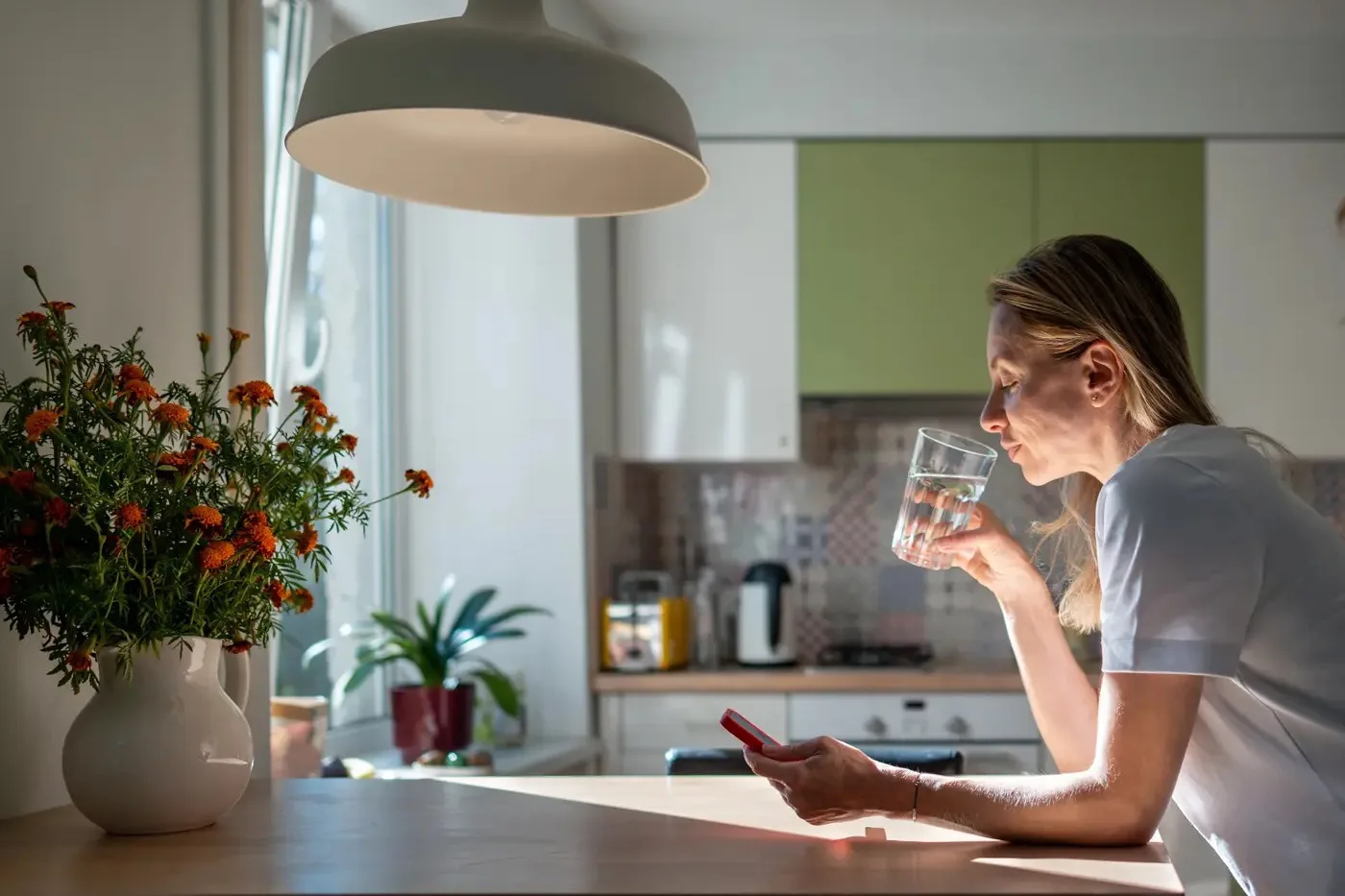
A racing heart, a tight chest, an upset stomach, tingling hands and a lump in the throat are all part of the body's threat response. Because the whole body joins in, anxiety is often mistaken for a medical emergency, and it is common for people to arrive here after a cardiac workup or an emergency room visit that found nothing wrong.
A clean result does not mean you imagined it. More often it means the alarm system is the problem, and an overactive alarm can be retrained. In the first stretch of treatment, the clinician walks you through what is happening in your body and the reasons behind it. For many people, understanding the mechanism takes much of the fear out of the sensations.
Medical causes should not be skipped. If you have new symptoms, a check with your physician is sensible, and our clinicians are glad to coordinate with your doctor. The aim is never to talk you out of a real health concern.
Therapy comes in once the medical question has been asked. Then the work shifts to the part you can change, which is how you respond to the sensations. Interpreting a pounding heart as danger feeds the next surge. Learning to see it as a harmless, temporary reaction cuts that feedback loop. Slower breathing and relaxation skills are added where they fit.
Treatment that works by facing, not avoiding
The center of anxiety treatment is approaching what you fear instead of dodging it. Avoidance is what converts a scare into a disorder. Every skipped highway, canceled dinner or unopened email tells the brain that the danger was real and that you barely escaped. Therapy teaches the opposite lesson.
In cognitive behavioral therapy you learn to catch the predictions anxiety makes, such as "I will faint" or "they will laugh at me." Then you test them in real situations, one step at a time and only with your agreement. Our CBT page for Pompton Plains describes how that method is structured.
Different diagnoses call for different tools. For panic, clinicians use interoceptive exercises, bringing on feared sensations safely during a session until a fast heartbeat is only a fast heartbeat. For social anxiety, the work includes dropping quiet safety habits like rehearsing every sentence or avoiding eye contact. For phobias, gradual exposure often resolves the fear in fewer sessions than people expect.
Clinicians also use acceptance-based approaches. They help you make room for uncomfortable feelings while still doing what matters to you.
The plan is built around you, not around a script. If a step feels too large, it gets broken into smaller ones.
Your first sessions and what follows
The first meeting is a conversation. Your clinician asks what brought you in, how long it has been going on, how you sleep, what stresses you and what you have already tried. You leave with a clear picture of what is happening and a plan you helped shape.
Sessions run 45 to 60 minutes and are usually weekly at first. Between visits you practice what you have learned, because change happens mostly in your daily life, not in the office. When your skills take hold, the schedule loosens by agreement.
Choosing an anxiety therapist is part of the process, and fit matters as much as credentials. The practice has 12 licensed clinicians who treat anxiety, including Beth Levy-Merlin, PhD, MSW, LCSW and Carol Tudor, LPC. You can browse more on our team page, or let the office pair you with someone based on a short conversation about your concerns and schedule.
People often ask how soon they will feel different. Lasting change takes steady practice, and your clinician tracks it with you so progress is visible instead of a guess.
When a child or teenager is anxious
Young people rarely say they feel anxious. Parents more often see stomachaches before school, refusal to go to a sleepover, a teenager who stays in her room, or a child who needs the same question answered over and over. Sleep trouble, irritability and sudden clinginess can be signs too, and they are worth mentioning on the first call.
Therapy for children is adjusted to age. Younger ones may work through play and drawing, while teenagers talk more directly with a clinician who is not a parent or teacher. Parents are part of the plan, because the household often changes along with the child, and parents learn how to support bravery without taking over the fear.
A common trap is accommodation. Handling every worrying task for a child feels kind, yet it teaches the child that avoiding works. A clinician helps families pull back gradually and consistently.
Our child and teen therapy page for Pompton Plains describes how we work with younger clients and how school can be involved with your written consent.
If worry ever shifts into thoughts of self-harm, call or text 988 or go to the nearest emergency room. Otherwise, a call to the office is an easy first step, and no referral is needed.
Getting from Pompton Plains to Roseland, or staying home
Pompton Plains sits along the Pompton River in Morris County, and its neighbors include Pequannock, Riverdale and Lincoln Park. Our Roseland office is about 23 minutes and 12.9 miles from town, reached by routes such as Route 23, US 46 and County Road 611. The office is on the first floor at 425 Eagle Rock Avenue, Suite 103, with free parking at the front and side.
Many people looking for an anxiety therapist in Pompton Plains are also juggling work and family, so the practical side counts. Evening and weekend slots can keep treatment from becoming one more thing to dread.
For some people with anxiety, the trip itself is the hard part. If highways, parking or waiting rooms make a visit feel like a hurdle, video removes it. Secure video sessions are available anywhere in New Jersey, and your clinician can work with you in your own living room, where anxiety so often does its damage. You can also mix the two, coming to the office on some weeks and logging in on others.
We offer weekday, evening and weekend appointments. Call (973) 226-1505 or send a request through the contact page. The office can check your insurance coverage when you call.

Further reading: Anxiety and Depression Association of America.
Who you'd see
Clinicians who treat Anxiety


Anxiety therapy for Pompton Plains: getting here
Usual route: Eagle Rock Avenue (CR 611), CR 613, US-46, NJ-23.
Roseland Psychotherapy Associates
425 Eagle Rock Avenue, Suite 103
Roseland, NJ 07068 · (973) 226-1505 · Open in Maps
Nearby towns we also serve
How to get started
Call or request a time
Call (973) 226-1505 or use the appointment form. Our office answers questions and can check your insurance coverage.
We match you
Tell us what is going on and when you are free. We pair you with the licensed clinician on our team who fits your concern and schedule.
Start in person or by video
Meet at 425 Eagle Rock Avenue with free parking, or log in from home in Pompton Plains. You can switch between the two as life changes.
Anxiety therapy in Pompton Plains: questions
Still unsure? Call (973) 226-1505 and ask us directly.
Is there an anxiety therapist close to Pompton Plains?
Yes. Roseland Psychotherapy Associates is about 23 minutes from Pompton Plains, in Roseland. Phobias, panic, social anxiety and generalized anxiety are all treated by our licensed clinicians. You can visit the first-floor office or meet by secure video. Reach the office at (973) 226-1505 to be paired with a clinician.
Can I see an anxiety therapist online from Pompton Plains?
Yes. We offer secure video sessions anywhere in New Jersey, so you can meet from home in Pompton Plains. Many exposure exercises transfer well to a screen. You can also combine video and office visits, and your clinician will help you decide which setting suits each stage of treatment.
How do I know my anxiety needs treatment?
Consider reaching out if worry or fear has lasted weeks, disrupts sleep, work or relationships, or leads you to avoid things you used to do. You do not need a diagnosis first. A first session with one of our clinicians will sort out what is happening and what would help.
Will therapy make me face my fears immediately?
No. Facing fears is central to treatment, but it happens gradually and with your agreement. You and your clinician start with small steps and move up at a pace you set. Early sessions focus on understanding your anxiety and building skills, so nothing arrives as a surprise.
How many sessions does anxiety therapy take?
It varies by person and by type of anxiety. Specific phobias often respond in fewer sessions, while generalized anxiety may take several months of weekly visits. Your clinician reviews progress with you regularly and adjusts the plan. Many people continue using the skills long after sessions end.
Does insurance cover anxiety therapy?
Coverage depends on your plan. Call (973) 226-1505 with your insurance details and the office will check your coverage before your first appointment. You do not need a referral to book, and you do not need to know which kind of anxiety you have before calling.
More care for Pompton Plains
Call or text (973) 226-1505
We'd love to hear from you. Tell us a little about what's going on and we'll match you with the therapist who fits you best, and check your insurance while we're at it. If you already know who you'd like to see, we'll book you with them. No referral needed. Press 0 for scheduling.
Weekday, evening and weekend appointments. Most major insurance accepted.