
Service areas / Cedar Knolls / Anxiety therapy
Anxiety therapist in Cedar Knolls, NJ
Roseland Psychotherapy Associates treats generalized anxiety, panic, social anxiety and phobias. An anxiety therapist in Cedar Knolls is reachable at our Roseland office, around 20 minutes away, and secure video lets you attend from home.
About 20 minutes from Cedar Knolls to our Roseland office. Secure video anywhere in New Jersey. No referral needed.
Quick answer
Looking for an anxiety therapist in Cedar Knolls? Roseland Psychotherapy Associates, at 425 Eagle Rock Avenue in Roseland, is about 20 minutes (10.9 miles) from Cedar Knolls. Licensed clinicians treat anxiety with CBT and related methods, in person or by secure video. No referral is needed. Call (973) 226-1505 and the office will match you.
Choosing an anxiety therapist in Cedar Knolls: the forms anxiety takes
A flight or a job interview makes nearly anyone nervous. An anxiety disorder is something else. The body's alarm rings with no emergency in sight, continues after the moment is over, and begins deciding for you which roads you take, which invitations you accept and which emails you can face opening.
It helps to name the pattern at work, because treatment differs by type.
- Generalized anxiety: worry that never stops and drifts from health to money to family to work, accompanied by tension, restlessness and poor sleep. The worry feels useful, and it usually is not
- Panic disorder: sudden waves of pounding heart, shortness of breath and dizziness, with certainty that something is medically wrong. The bigger problem is often the fear of the next attack and how much of life gets cut back to avoid one
- Social anxiety: strong fear of being judged, watched or embarrassed. It is often mistaken for shyness
- Specific phobias: driving, flying, needles, animals, heights. These fears are narrow, but they can have large effects, and a needle phobia can keep someone away from medical care for years
When you ask for an anxiety therapist in Cedar Knolls, the office will ask which of these sounds closest, and match you with a clinician accordingly. You do not need a diagnosis to call.
 Clinically reviewed by Julie Potischman, PhD, LPC, NCC, CST, partner and co-founder of Roseland Psychotherapy Associates and an AASECT-certified sex therapist. Meet the team.
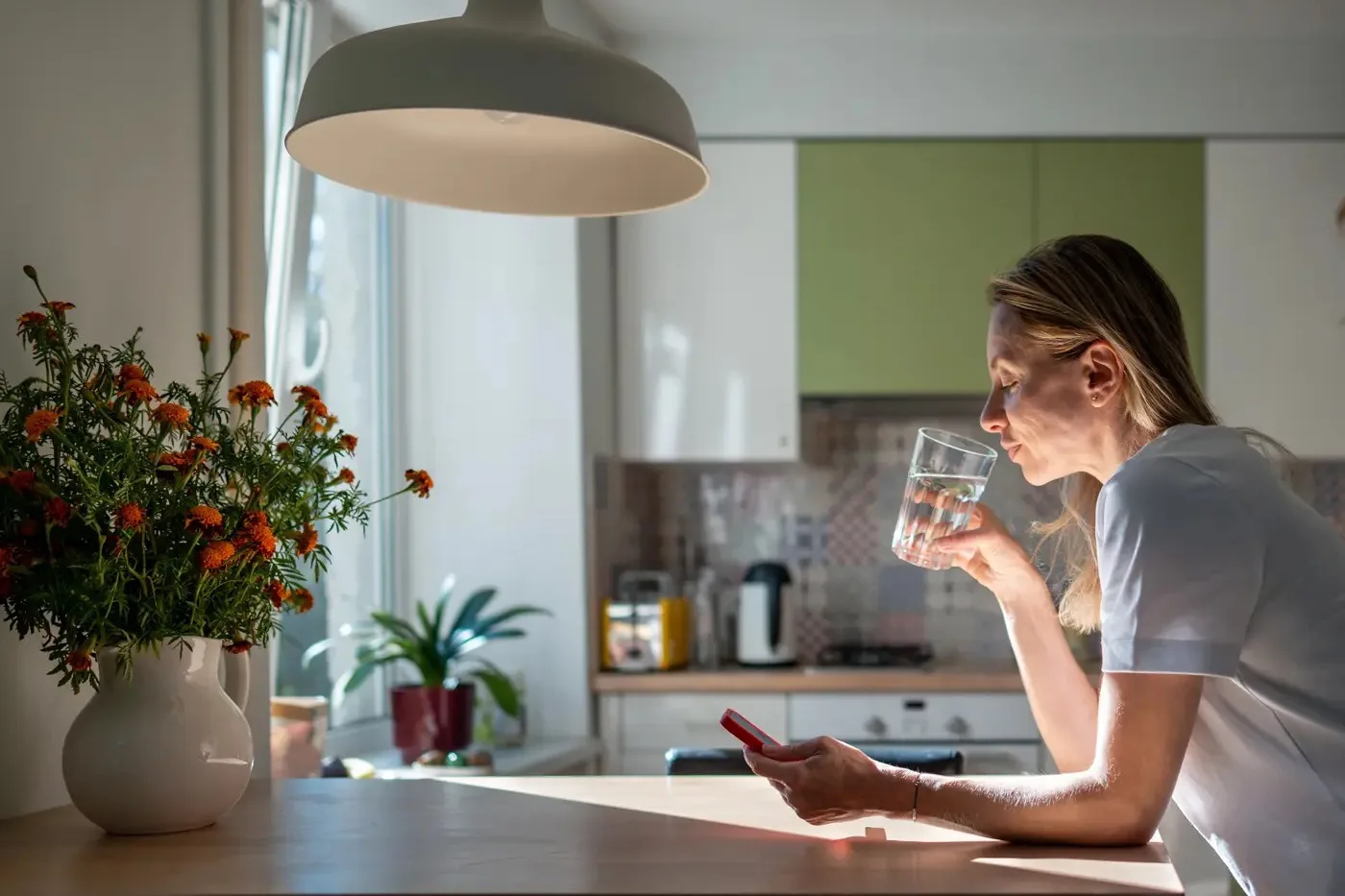
Why anxiety feels so physical
A pounding heart, a tight chest, a churning stomach, hands that tingle, a throat that feels blocked. The entire body takes part in a threat response, so anxiety is felt everywhere, not only in the mind. A good number of clients arrive after a cardiac workup or an emergency room visit turned up no problem.
A normal heart test does not make the symptoms imaginary. More often the alarm system is what has gone off track, and that can be treated.
At the start of therapy, the clinician walks you through what your body is doing and the reason for it. That understanding by itself takes some of the fear out of the sensations for lots of people. Panic in particular loses some of its force once you understand that a racing heart is uncomfortable but not dangerous.
It remains wise to see your physician if you have new or unexplained symptoms. Therapy does not replace a medical check, and a good clinician will encourage one when it makes sense.
Social anxiety shows up differently. People who have it often seem fine during the event, yet spend hours rehearsing in advance and replaying it afterward. The exhaustion is real even if no one around you can see it.
If worry and low mood arrive together, our depression and anxiety therapy page for Cedar Knolls covers how we treat the combination.
How treatment works: approaching what you fear
At its center, treating anxiety means moving toward the feared thing rather than away from it. It is avoidance that converts a fright into a disorder. Every highway drive you skip or invitation you decline tells the brain the situation was dangerous and that you narrowly escaped. Therapy reverses that lesson.
CBT starts with spotting the forecasts anxiety offers ("I might pass out," "they will laugh at me," "this is too much"). Next, with your agreement and one step at a time, you check each forecast in real situations and discover it did not hold. Our CBT page for Cedar Knolls describes the structure.
The method adapts to the problem. Panic treatment adds interoceptive work, in which the feared sensations are brought on safely during a session until a racing heart is simply a racing heart. With social anxiety, the task is giving up safety behaviors, among them over-rehearsing, looking away from others and drinking beforehand, that silently keep the fear alive. For phobias, gradual exposure resolves many cases in fewer sessions than people expect.
Our clinicians also use acceptance-based approaches, along with relaxation and breathing training where they fit. Whatever the diagnosis, the plan is shaped to fit the individual. You can read about the Anxiety and Depression Association of America for more public information.
When anxiety is running your schedule
The first session is an evaluation. Your clinician learns what a hard day looks like, what you have avoided, and what you hope to be able to do again. You do not need to face anything difficult in that first hour.
From there, sessions run 45 to 60 minutes, usually weekly. You and your clinician set goals that you can see: taking the highway to work, sitting through a meeting without leaving, getting a blood test done. Goals are revisited as you progress.
Practice between sessions is a standard part of the plan. It is usually modest and scheduled, and it is designed so that you succeed at it. Small wins build the confidence that large leaps cannot.
The pace is yours to influence. Anxiety treatment works best when you feel challenged but not overwhelmed, and your clinician checks in regularly to be sure you are at that point.
Clinicians tagged for anxiety include Beth Levy-Merlin, PhD, MSW, LCSW and Carol Tudor, LPC, among others on the team.
An anxiety therapist in Cedar Knolls or nearby can see you weekly while you keep working and parenting.
Anxiety in children, in relationships, and with OCD
Anxiety is not limited to adults. Children and teenagers may show it as stomachaches, school avoidance, irritability or constant reassurance-seeking. Parents often find it hard to tell worry from stubbornness. Our therapy for teenagers in Cedar Knolls page explains how we work with younger clients and their parents.
Anxiety also affects couples. One partner may avoid social events while the other feels shut in, or one may seek constant reassurance. If this sounds familiar, couples and family therapy in Cedar Knolls offers a way to work on it together.
Some anxiety is better described as obsessive-compulsive disorder, in which unwanted thoughts are paired with rituals that bring short relief. The treatment differs, and our OCD specialist page explains Exposure and Response Prevention.
Not sure which applies? You do not have to figure it out alone. An evaluation sorts out which pattern you are dealing with, and the plan follows from that.
Roseland Psychotherapy Associates does not prescribe medication. If an evaluation seems worthwhile, your clinician can coordinate with your physician or a prescriber. For the broader overview, see the main anxiety therapist page.
Getting from Cedar Knolls to Roseland, or working from home
Cedar Knolls is an unincorporated community in Hanover Township, in Morris County, with Interstate 287 along its eastern edge. Our Roseland office is about 20 minutes and 10.9 miles away, and routes such as CR 611, CR 609, NJ 10 and South Jefferson Road connect the area to Roseland. Nearby communities include Morris Plains, Whippany, Morristown, Convent Station, Troy Hills and Mount Tabor.
Suite 103 of 425 Eagle Rock Avenue is a first-floor office, and parking in front and along the side is free of charge. If driving is part of what you fear, getting to a first appointment can be the hardest step. Secure video is available anywhere in New Jersey, so you can start from your own living room and come to the office later if you want to.
Many clients with anxiety mix the two. Exposure practice can even be planned around the drive itself, once you and your clinician decide it is time.
Scheduling covers weekday, evening and weekend slots. Call (973) 226-1505 or use the appointment request form. No referral is needed, and the office can check your insurance coverage when you call.

Further reading: Anxiety and Depression Association of America.
Who you'd see
Clinicians who treat Anxiety



Anxiety therapy for Cedar Knolls: getting here
Usual route: Eagle Rock Avenue (CR 611), CR 609, NJ-10, South Jefferson Road.
Roseland Psychotherapy Associates
425 Eagle Rock Avenue, Suite 103
Roseland, NJ 07068 · (973) 226-1505 · Open in Maps
How to get started
Call or request a time
Call (973) 226-1505 or use the appointment form. Our office answers questions and can check your insurance coverage.
We match you
Tell us what is going on and when you are free. We pair you with the licensed clinician on our team who fits your concern and schedule.
Start in person or by video
Meet at 425 Eagle Rock Avenue with free parking, or log in from home in Cedar Knolls. You can switch between the two as life changes.
Anxiety therapy in Cedar Knolls: questions
Still unsure? Call (973) 226-1505 and ask us directly.
Is there an anxiety therapist near Cedar Knolls?
Yes. Roseland Psychotherapy Associates is about 20 minutes from Cedar Knolls in Roseland. Licensed clinicians here treat panic, phobias, social anxiety and generalized anxiety. Sessions can be held in the first-floor office or over secure video. Ring (973) 226-1505 and the staff will pair you with a clinician.
Can I see an anxiety therapist by video from Cedar Knolls?
Yes. Secure video is available anywhere in New Jersey and uses the same methods as office visits. It can be especially helpful if leaving home or driving is part of the anxiety. You can start online and move to the Roseland office later, or mix the two.
How do I know if it is anxiety or something else?
A careful evaluation in the first session sorts this out. Anxiety can overlap with depression and, in some cases, with OCD, and treatment differs. You do not need to know your diagnosis before calling, and your clinician will explain what they find and how it shapes the plan.
How long does anxiety therapy take?
It depends on the type and how long it has been present. Sessions run 45 to 60 minutes and are usually weekly. Gradual exposure often resolves specific phobias in fewer sessions than people expect, while generalized anxiety may take longer. Progress gets reviewed with your clinician, who revises the plan as needed.
Will I be forced to face what scares me?
No. Exposure happens step by step and only with your agreement, starting with items you can manage. You help set the pace, and your clinician checks in to be sure the work is challenging but not overwhelming. The first session is an evaluation and involves no exposure.
Does insurance cover anxiety therapy?
Coverage depends on your plan. Call (973) 226-1505 with your plan details and the office can check your coverage when you call. You do not need a referral to book, and the staff can help you find an appointment time that fits around work and family.
Call or text (973) 226-1505
We'd love to hear from you. Tell us a little about what's going on and we'll match you with the therapist who fits you best, and check your insurance while we're at it. If you already know who you'd like to see, we'll book you with them. No referral needed. Press 0 for scheduling.
Weekday, evening and weekend appointments. Most major insurance accepted.