
Service areas / Whippany / Anxiety therapy
Anxiety therapist in Whippany, NJ
Anxiety can run your schedule without anyone seeing it. Roseland Psychotherapy Associates has an anxiety therapist for Whippany clients at our Roseland office, about 14 minutes away, and offers secure video for people who would rather stay home.
About 14 minutes from Whippany to our Roseland office. Secure video anywhere in New Jersey. No referral needed.
Quick answer
Which practice offers an anxiety therapist in Whippany and nearby towns? Roseland Psychotherapy Associates, at 425 Eagle Rock Avenue in Roseland, is about 14 minutes (8.1 miles) away. Licensed clinicians treat worry, panic, social anxiety and phobias with cognitive behavioral and acceptance-based methods, in person or by secure video. No referral is needed. Call (973) 226-1505.
Choosing an anxiety therapist in Whippany
Anxiety is not a single thing, and the right treatment depends on which kind you have. Generalized anxiety is worry that moves from topic to topic and rarely switches off. Panic is sudden surges of fear, often with a pounding heart and a sense of losing control, and many people then begin avoiding the places where it happened. Social anxiety is a strong fear of being judged, watched or embarrassed, and it is often mistaken for shyness. Specific phobias are narrow fears of driving, flying, needles, vomiting, animals or heights, though their effects can be large.
Someone with social anxiety may get through the event itself, only to spend hours beforehand scripting it and hours afterward reliving it. A needle phobia can keep someone from medical care for a decade.
An anxiety therapist in Whippany can help you work out which pattern fits and build a plan around it. At Roseland Psychotherapy Associates, Beth Levy-Merlin, PhD, MSW, LCSW and Carol Tudor, LPC are among the clinicians who treat anxiety, and the office matches you with the one who fits you. Tell the office what you are dealing with, and what you hope to be doing again, and that shapes the match. Our anxiety therapy overview describes the approach in more detail.
 Clinically reviewed by Beth Levy-Merlin, PhD, MSW, LCSW, partner and co-founder of Roseland Psychotherapy Associates, in practice since 2001. Meet the team.
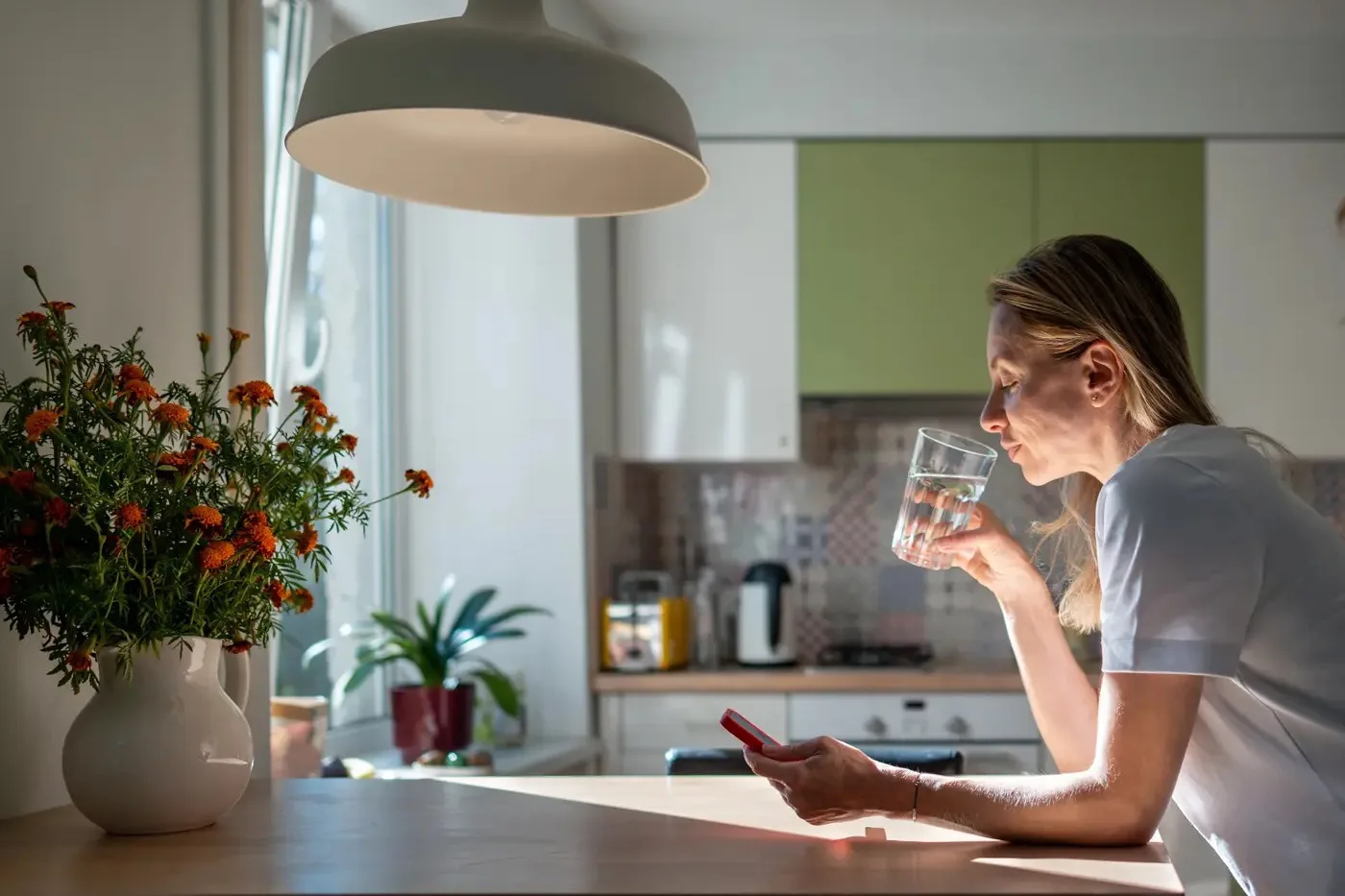
Why anxiety feels so physical
Pounding pulse, chest pressure, a churning stomach, pins and needles in the fingers, a tight throat. The reaction is bodily because the brain's alarm system recruits every part of the body at once. A lot of clients first reach us after a heart evaluation or an urgent care trip turned up no problem.
A normal heart test does not close the question. More often the trouble lies with the alarm system, and that is something treatment can address. In the first stretch of therapy, the clinician walks you through what your body is doing and the reason. For many people, simply knowing that makes the sensations less frightening.
This matters because the fear of the sensations often becomes its own problem. A person feels a flutter, worries it signals danger, and the worry produces more flutter. Breaking that loop is a core part of treatment for panic.
It is still sensible to see a physician if you have new or unexplained physical symptoms. Therapy works alongside medical care, never in place of it, and a clinician will tell you when a medical check is worth having. Roseland Psychotherapy Associates does not prescribe, so if medication comes up, we coordinate with your physician or a local psychiatric professional. Our page on finding the right psychiatrist explains how.
How treatment works: approaching what you avoid
Treatment for anxiety rests on moving toward the feared thing rather than steering around it. Steering clear is the step that converts a fright into a lasting condition. Every freeway you skip or invite you turn down tells the brain the situation was a true threat and you barely escaped. Therapy reverses that lesson.
Cognitive behavioral therapy trains you to catch the forecasts anxiety issues, for example I cannot cope, everyone will laugh or I am about to faint. Next comes testing each one in everyday settings, in small stages and only with your consent, to see that the forecast did not come true. Our CBT page for Whippany describes the method.
The details change with the diagnosis:
- Panic: includes interoceptive work, bringing on the feared sensations in session, safely, until a racing heart is just a racing heart
- Social anxiety: means dropping the safety behaviors that quietly keep the fear going, such as over-rehearsing, avoiding eye contact or drinking beforehand
- Phobias: gradual exposure resolves most cases in fewer sessions than people expect
Sessions run 45 to 60 minutes and usually happen weekly, with small practice tasks between visits. Acceptance-based methods plus relaxation and breathing practice are added by our clinicians when they suit the person. Whatever the diagnosis, the plan is shaped around the individual.
When worry takes over the schedule
Anxiety rarely announces itself as a medical problem. It shows up as a commute you rearranged, a meeting you skipped, a party you declined, a call you keep putting off. Each choice seems reasonable, and together they shrink a life.
Here are some signs that it may be time to talk to someone:
- You avoid places, people or tasks because of how you expect to feel
- Sleep is disrupted by worry that will not quiet down
- Physical symptoms keep returning without a medical cause
- Reassurance helps for an hour and then wears off
- The worry is costing you work, school or relationships
If reassurance, repeated checking or mental rituals dominate your day, the pattern may be OCD rather than general anxiety, and our OCD specialist page for Whippany explains the difference. When low mood is part of the picture, our depression and anxiety therapy page for Whippany covers treating both together.
The first session is an evaluation. The clinician identifies the pattern, and together you settle on a plan. Nothing difficult is asked of you at the outset. If you are in crisis or thinking about suicide, call or text 988 or go to the nearest emergency room.
Anxious children and teenagers
In young people anxiety often hides behind other behavior, such as morning bellyaches before school, tears at the classroom door, homework that must be flawless, or bedtime rituals that depend on comfort that never quite settles things. Parents sometimes read it as defiance or laziness, and the child may not have words for what is going on.
Younger patients receive age-appropriate methods from our team, with parents included in the plan. The way a family answers a child's fear carries heavy weight. Comfort helps. Rearranging the household around the fear tends to feed it, and a clinician can show you where that line falls.
Methods are adjusted to the child's age, and your clinician will explain how the work is set up for your family.
Our child and teen therapy page for Whippany goes into more detail on how we work with younger clients and their families. If you are unsure whether your child's worry is typical, call and describe it, and the office will tell you honestly whether an evaluation would help.
Practice exposure where the fear lives, from Whippany
Whippany is an unincorporated community in Hanover Township, in eastern Morris County, and our office is about 14 minutes and 8.1 miles away. The usual routes run along County Road 611, County Road 609 and NJ 10. Highway driving can itself be a trigger for some people, so tell the office if the drive worries you, and we can plan around it. Suite 103 at 425 Eagle Rock Avenue is a ground-floor office, and free parking is right beside and in front of it.
For anxiety, video has a real advantage. Practice with exposure can take place at the spot where the fear lives, whether that is the driver's seat, the stove or the desk where you rehearse a presentation. It also removes a barrier for people whose fear of going out is what has kept them from getting help. Clients anywhere in New Jersey can use secure video, and a good number alternate between video and the office from week to week.
Troy Hills, Cedar Knolls, East Hanover and Florham Park are all within about three miles of Whippany, and clients can choose a mix of both formats. Call (973) 226-1505 or send the appointment request. No referral is needed, and the office can check your insurance coverage when you call.

Further reading: Anxiety and Depression Association of America.
Who you'd see
Clinicians who treat Anxiety



Anxiety therapy for Whippany: getting here
Usual route: Eagle Rock Avenue (CR 611), CR 609, NJ-10.
Roseland Psychotherapy Associates
425 Eagle Rock Avenue, Suite 103
Roseland, NJ 07068 · (973) 226-1505 · Open in Maps
How to get started
Call or request a time
Call (973) 226-1505 or use the appointment form. Our office answers questions and can check your insurance coverage.
We match you
Tell us what is going on and when you are free. We pair you with the licensed clinician on our team who fits your concern and schedule.
Start in person or by video
Meet at 425 Eagle Rock Avenue with free parking, or log in from home in Whippany. You can switch between the two as life changes.
Anxiety therapy in Whippany: questions
Still unsure? Call (973) 226-1505 and ask us directly.
Is there an anxiety therapist close to Whippany?
Yes. Roseland Psychotherapy Associates is about 14 minutes from Whippany in Roseland, and our licensed clinicians treat worry, panic, social anxiety and phobias. You can meet in the first-floor office, with free parking, or by secure video. The office, at (973) 226-1505, will arrange a match with one of the clinicians.
Can I get help for panic attacks online?
For many people, yes. Secure video works well for most anxiety treatment and is available anywhere in New Jersey. Some clients find it easier to start from home, especially when anxiety makes driving or waiting rooms hard. Your clinician helps you decide which setting suits the work.
Will I have to face my fears right away?
No. The opening appointment is an evaluation, and nothing difficult is expected of you right away. Exposure happens step by step, only with your agreement, and at a pace you help set. The aim is to test what anxiety predicts, not to overwhelm you.
How long does anxiety treatment take?
It depends on the kind of anxiety and how long it has been present. Gradual exposure resolves many phobias in fewer sessions than people expect, while generalized worry may take longer. Sessions run 45 to 60 minutes, and your clinician reviews progress with you along the way.
Do I need medication for anxiety?
Not necessarily. Many people do well with therapy alone, and your clinician will say honestly if an evaluation seems worthwhile. Roseland Psychotherapy Associates does not prescribe, but we coordinate with your physician or a local psychiatric professional and offer referrals when it would help.
Does insurance cover anxiety therapy?
Coverage depends on your plan. Call (973) 226-1505 and the office will check your coverage when you call. You do not need a referral to book. If anxiety is making the call itself hard, you can also send a request through the contact page and the office will reach out.
Call or text (973) 226-1505
We'd love to hear from you. Tell us a little about what's going on and we'll match you with the therapist who fits you best, and check your insurance while we're at it. If you already know who you'd like to see, we'll book you with them. No referral needed. Press 0 for scheduling.
Weekday, evening and weekend appointments. Most major insurance accepted.