
Service areas / Maplewood / Anxiety therapy
Anxiety therapist in Maplewood, NJ
Roseland Psychotherapy Associates treats generalized anxiety, panic, social anxiety and phobias. If you are searching for an anxiety therapist in Maplewood, our Roseland office is about 21 minutes away, and secure video sessions are available from home.
About 21 minutes from Maplewood to our Roseland office. Secure video anywhere in New Jersey. No referral needed.
Quick answer
Looking for an anxiety therapist in Maplewood? Roseland Psychotherapy Associates, at 425 Eagle Rock Avenue in Roseland, is about 21 minutes (10.4 miles) from Maplewood. Licensed clinicians treat anxiety with CBT and exposure-based methods, in person or by secure video anywhere in New Jersey. No referral is needed. Call (973) 226-1505.
The main kinds of anxiety, and why the type matters
Everyone feels nervous before a flight or a job interview. An anxiety disorder is something different. An alarm sounds in the body with no emergency in sight, continues long after the moment is over, and then begins steering choices: the roads you take, the invitations you accept, the messages you are able to open.
Naming the pattern helps, because treatment differs by type. The following come up most often in our office:
- Generalized anxiety: ongoing worry that jumps among health, money, family and work, plus muscle tension, restlessness and disrupted sleep. The worry feels useful, and usually is not.
- Panic disorder: sudden waves of pounding heart, shortness of breath and dizziness, with certainty that something is medically wrong. The fear of the next attack often shrinks life more than the attacks do.
- Social anxiety: an intense dread of judgment or embarrassment that people often take for shyness. People may manage in the moment, then pay with hours of rehearsing and replaying.
- Specific phobias: fears tied to driving, flying, injections, vomiting, animals or heights. The fears are narrow, but their effects can be wide.
A clinician will help you work out which of these fits, and many people find that more than one applies.
 Clinically reviewed by Julie Potischman, PhD, LPC, NCC, CST, partner and co-founder of Roseland Psychotherapy Associates and an AASECT-certified sex therapist. Meet the team.
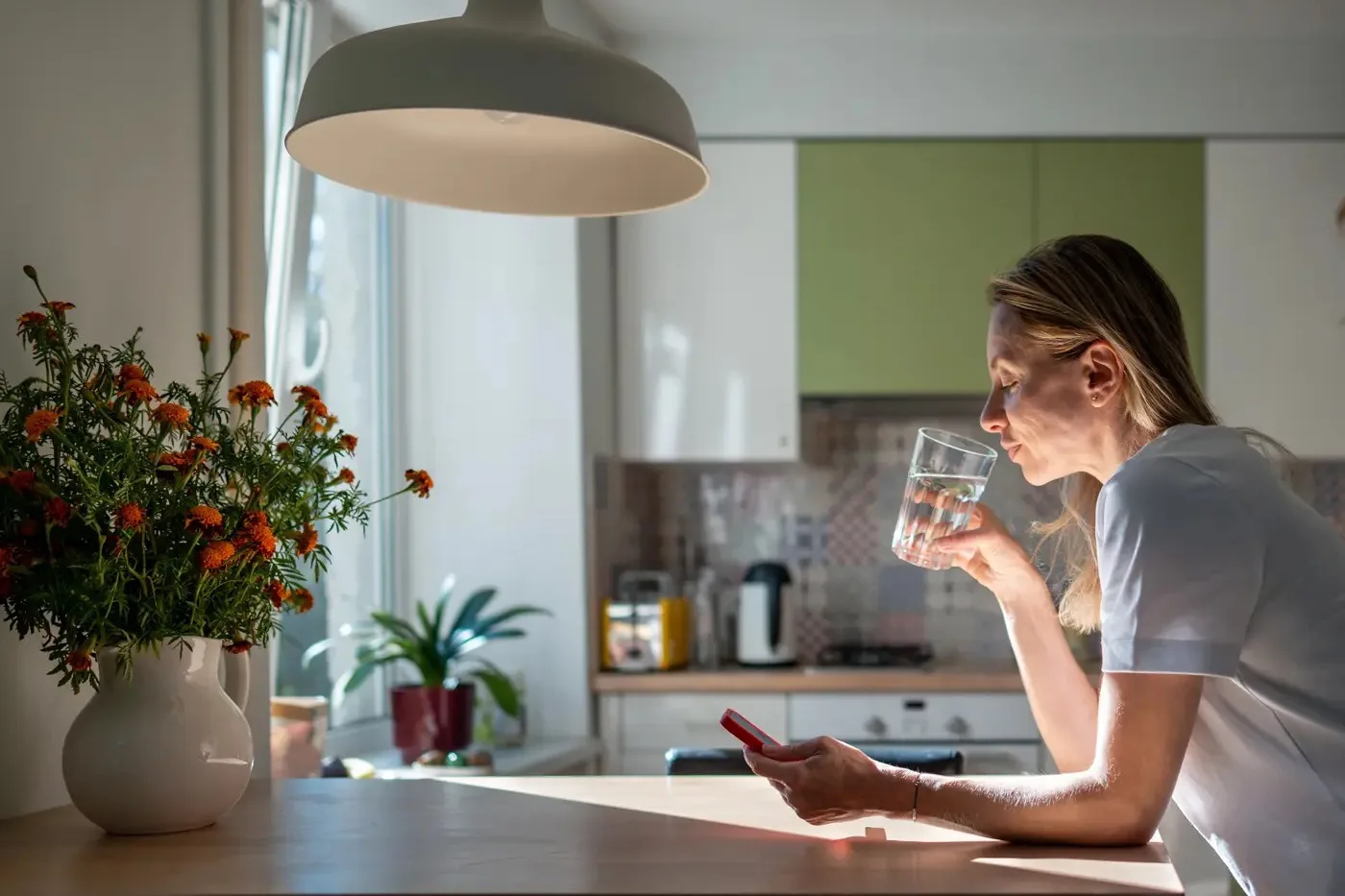
Why anxiety feels like a physical illness
Pounding heartbeat, pressure in the chest, queasiness, pins and needles in the hands, a tight throat. Anxiety shows up all over the body because the threat response involves the whole body. Many people first contact us once a heart workup or a trip to the emergency room has turned up no medical problem.
Clear test results do not mean the distress is imaginary. More often the trouble lies in the alarm system, and that system responds to treatment. Please do see a doctor if symptoms are new or severe. Our clinicians would rather you be checked than guess.
Early in therapy, we explain what the body is doing and why. For a lot of clients, understanding this by itself takes some of the fear out of the sensations. A pounding heart stops feeling like proof of danger and begins to look like what it is: a system doing its job a little too well.
If worry is only one piece of what you are going through, our page on a depression and anxiety therapist in Maplewood covers the overlap with low mood. If anxiety is tied to intrusive thoughts and rituals, you may want to read about an OCD specialist in Maplewood instead.
How an anxiety therapist in Maplewood treats it
The core of anxiety treatment is approaching what you fear rather than avoiding it. Avoiding things is how a scare hardens into a disorder. Every highway drive you skip and every invitation you decline tells the brain the situation was dangerous and that you got away. Therapy reverses that lesson.
CBT begins with catching the forecasts anxiety makes ("I will freeze," "everyone will stare," "this will be too much"). Next you check those forecasts against real situations, one step at a time and only when you agree, and see that they did not come true. You can read more about the method on our CBT in Maplewood page.
For panic, this includes interoceptive work, which means bringing on the feared sensations safely in session until a racing heart is just a racing heart. With social anxiety, the task is to let go of safety behaviors that keep the fear alive without being noticed, including rehearsing too much, avoiding eye contact or having a drink first. Phobias tend to respond to gradual exposure, usually in fewer sessions than people anticipate.
Acceptance-based methods, along with relaxation and breathing training, are also used by our clinicians when they suit the person. The plan is built around you, whatever the diagnosis. Anxiety clients are seen by clinicians such as Beth Levy-Merlin, PhD, MSW, LCSW and Peter Lawson, MA, LPC.
Anxious children and teenagers
In young people, anxiety often looks like something else. A child who has stomachaches before school, falls apart at drop-off, obsesses over getting homework perfect, or needs endless reassurance at bedtime may be showing anxiety. Adults often read them as defiance or laziness.
Children and teens are treated with methods fitted to their age, and parents take part in the planning. The way a family reacts to a child's worry carries real weight. Comfort helps. Reorganizing daily life to avoid the fear usually strengthens it. A clinician can help parents tell the difference, which is often the hardest part.
Families sometimes worry that therapy will make a child dwell on fears. In practice, the work is gradual and paced to the child, and the goal is to help them do more, not to talk about the fear for its own sake.
For a fuller picture of how young people are seen at the practice, read about therapy for teenagers in Maplewood. If a child ever talks about self-harm or not wanting to be alive, call or text 988, the Suicide & Crisis Lifeline, or go to the nearest emergency room.
Starting treatment, in the office or online
The first session is an evaluation. Your clinician names the pattern and you agree on a plan. Nothing difficult is expected of you at the first appointment. Sessions run 45 to 60 minutes, usually weekly, and you decide the pace of each step.
Secure video sessions are available anywhere in New Jersey. For anxiety, video has a particular benefit: if leaving the house is part of the problem, you can begin from the place where you feel safest and work outward. Many clients later combine video with office visits in Roseland.
Weekday, evening and weekend appointments are available by scheduling. Scheduling by appointment lets you look for a recurring slot that fits your week.
To get started, call (973) 226-1505 or use the contact page. No referral is needed, and the office helps match you with the clinician who fits. If the match feels off after a few sessions, tell us. The office can check your insurance coverage when you call. You can also read the practice's overview of anxiety therapy before you reach out.
The drive from Maplewood, and options when driving is the problem
Our office is at 425 Eagle Rock Avenue, Suite 103, in Roseland, about 21 minutes and 10.4 miles from Maplewood. We serve the township from there. Routes from Maplewood include County Road 611, County Road 527, Interstate 280, South Valley Road and North Ridgewood Road.
Maplewood is a township of 25,684 people in Essex County, and an inner-ring suburban bedroom community of New York City. For someone whose anxiety involves driving, highways or leaving home, a 21-minute trip may itself be part of the difficulty. That is a reason to raise it with your clinician, not a reason to stay away. Video is available if you want to begin from home, and an office visit can be added later as a planned step.
The office is on the first floor, with free parking at the front and side, and wheelchair-accessible parking and walkways.
Evening and weekend appointments are available by scheduling. The office can talk through the travel and the timing with you before you book, so call (973) 226-1505 with any questions. You can also change formats later without starting over.

Further reading: Anxiety and Depression Association of America.
Who you'd see
Clinicians who treat Anxiety



Anxiety therapy for Maplewood: getting here
Usual route: Eagle Rock Avenue (CR 611), CR 527, I-280, South Valley Road.
Roseland Psychotherapy Associates
425 Eagle Rock Avenue, Suite 103
Roseland, NJ 07068 · (973) 226-1505 · Open in Maps
Nearby towns we also serve
How to get started
Call or request a time
Call (973) 226-1505 or use the appointment form. Our office answers questions and can check your insurance coverage.
We match you
Tell us what is going on and when you are free. We pair you with the licensed clinician on our team who fits your concern and schedule.
Start in person or by video
Meet at 425 Eagle Rock Avenue with free parking, or log in from home in Maplewood. You can switch between the two as life changes.
Anxiety therapy in Maplewood: questions
Still unsure? Call (973) 226-1505 and ask us directly.
Is there an anxiety therapist near Maplewood?
Yes. Roseland Psychotherapy Associates is about 21 minutes from Maplewood at 425 Eagle Rock Avenue in Roseland. Licensed clinicians treat generalized anxiety, panic, social anxiety and phobias in the office or by secure video. Reach the office at (973) 226-1505 and it will connect you with a clinician.
Can I see an anxiety therapist by video from Maplewood?
Yes. Secure video sessions are available anywhere in New Jersey, so you can meet from home in Maplewood. This can help if leaving the house is part of the problem. Many clients combine video with office visits in Roseland and adjust the mix as treatment moves along.
How long does anxiety therapy take?
It depends on the type of anxiety and your goals. Sessions run 45 to 60 minutes, usually weekly. Specific phobias often clear up with gradual exposure in fewer sessions than most people anticipate, while panic or generalized worry may take longer. Your clinician reviews progress with you as you go.
What if my symptoms feel physical, like a racing heart?
Anxiety often shows up in the body, and many clients come after medical tests found nothing wrong. See a doctor if symptoms are new or severe. In therapy, your clinician explains what the body is doing, which often makes the sensations less frightening, and then treats the alarm directly.
Do you treat anxiety in children and teenagers?
Yes. Children and teens are treated with methods fitted to their age, and parents take part in the planning. The way a family reacts to a child's worry matters, so parents receive guidance as well. Call the office, describe what you are seeing, and we will suggest next steps.
Does insurance cover anxiety therapy?
Coverage depends on your plan. Call (973) 226-1505 and the office can check your insurance coverage when you call. Keep your plan details nearby to speed things up. If coverage is a concern, mention it early so you understand your options before the first appointment.
Call or text (973) 226-1505
We'd love to hear from you. Tell us a little about what's going on and we'll match you with the therapist who fits you best, and check your insurance while we're at it. If you already know who you'd like to see, we'll book you with them. No referral needed. Press 0 for scheduling.
Weekday, evening and weekend appointments. Most major insurance accepted.