
Services / Cognitive Behavioral Therapy
Cognitive Behavioral Therapy (CBT) in New Jersey.
A structured, skills-based therapy with the strongest research record in the field. Offered by licensed clinicians at Roseland Psychotherapy Associates, in person in Roseland and by secure video statewide.
7 of our clinicians do this work. We'll match you with the one who fits you best. You don't need a referral. Sessions are in our Roseland office or by secure video anywhere in New Jersey.
Who you'd see
Clinicians who treat Cognitive Behavioral Therapy (CBT)
 Peter LawsonMA, LPCAccepting new clientsRead Peter's bio
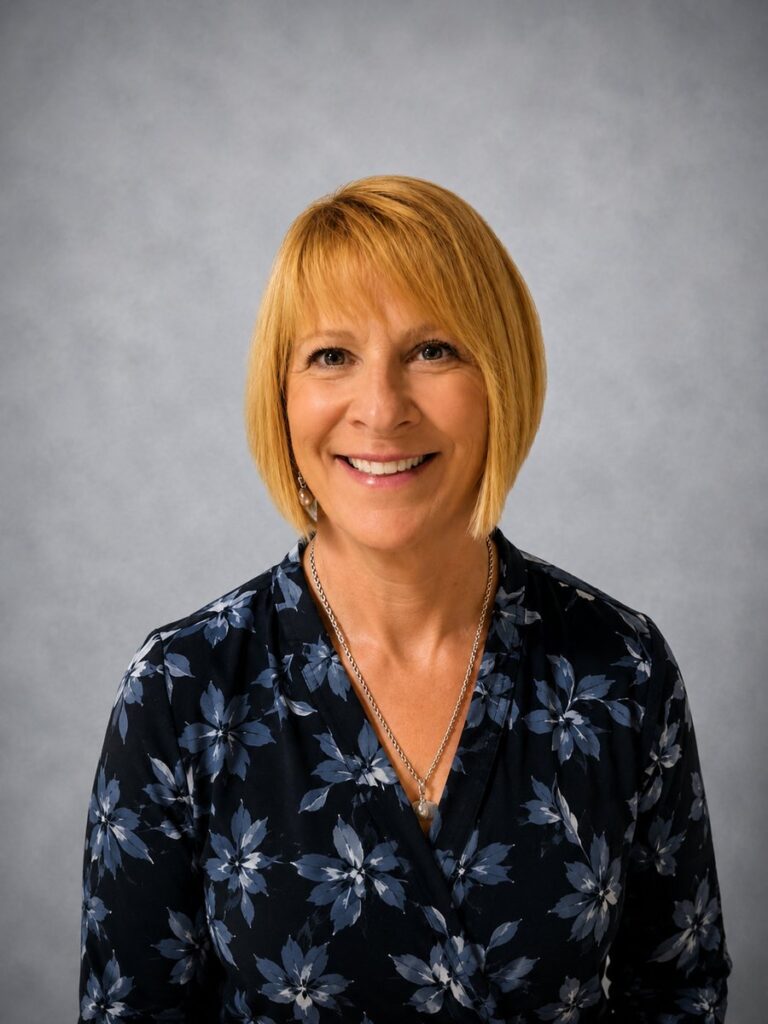 Carol TudorLPC EMDRAccepting new clientsRead Carol's bio
 Beth Levy-MerlinPhD, MSW, LCSWAccepting new clientsRead Beth's bio
 Julie PotischmanPhD, LPC, NCC, CSTAccepting new clientsRead Julie's bio
 Monica AvisadoMSW, LCSWAccepting new clientsRead Monica's bio
 Eric LatzmanLCSWAccepting new clientsRead Eric's bio
What CBT is
Cognitive Behavioral Therapy starts from a simple observation: how we feel about an event depends largely on how we read it in the moment right after. A friend walks past without saying hello. One person thinks “she didn't see me” and moves on. Another thinks “she's angry with me” and spends the evening replaying every recent conversation. The event is the same. The thought is different, and so are the feeling and, usually, what the person does next.
These automatic interpretations happen so fast they feel like facts. CBT slows them down, gets them on paper, and examines them like any other claim. What is the evidence for this thought? What is the evidence against it? What would I tell a friend who thought it? The aim is accuracy. Most distressing automatic thoughts turn out to be distorted in predictable ways, and mood tends to follow once the distortion is corrected. Nobody is asking you to force yourself to think positively.
How thoughts, feelings, and behavior connect
Thoughts, feelings, and behaviors form a loop. The thought “I'll embarrass myself” brings dread. Dread leads to avoidance. Avoidance prevents the experience that would have disproved the thought, so the thought stays around to fire again. CBT works on the two parts of the loop you can change directly: what you think and what you do. You can't change a feeling by deciding to, but feelings reliably shift when the other two change.
 Clinically reviewed by Beth Levy-Merlin, PhD, MSW, LCSW,
partner and co-founder of Roseland Psychotherapy Associates, in practice
since 2001. Meet the team.
What a course of CBT looks like
CBT is more structured than the therapy people see in movies. Each session has an agenda you set together. Goals are named at the start, and progress toward them is measured. You learn specific, teachable skills such as thought records, behavioral experiments, activity scheduling, and graded exposure. From the first session, the aim is for you to become your own therapist so that treatment can end.
- Assessment and goal-setting. The first sessions map the problem as a loop: which situations, which thoughts, which behaviors, and what they cost you.
- Skills and experiments. In the middle of treatment you learn the tools and test your predictions in real life, one chosen situation at a time.
- Practice between sessions. CBT includes homework, and most of the change happens there. One hour a week in an office can't compete with the other 167. Homework puts some of those hours to use.
- Relapse prevention. In the last sessions, what worked goes into a written plan you keep.
Sessions at Roseland Psychotherapy Associates run 45 to 60 minutes, usually weekly. As your skills take hold, we decide together how often to meet.
What CBT treats
Few approaches in mental health have been studied as much. CBT is a first-line treatment for depression and for anxiety disorders, including generalized anxiety, panic, social anxiety, and phobias. Adapted versions are central to treating OCD, insomnia, stress-related problems, and low self-esteem. CBT is also used alongside other care. A person getting psychiatric treatment for a mood disorder often does CBT at the same time, and our practice coordinates with local psychiatric professionals when medication is involved.
CBT does not fit every problem, and we don't use it as if it did. When grief, relationship patterns, or long-standing questions of identity are the main issue, our clinicians use psychodynamic, acceptance-based, and family systems approaches, either instead of CBT or together with it. We choose the method to suit the problem.
CBT with children and teenagers
CBT is concrete and built on skills, so it adapts well to young people. A ten-year-old can learn to spot a “worry thought” and talk back to it. A teenager can run an experiment on what actually happens when a text goes unanswered. With children, we bring parents into the work so the skills practiced in session are supported at home instead of accidentally undone.
Teletherapy across New Jersey
CBT works especially well by video. The session structure, the worksheets, and the assignments between sessions are the same on a screen, and practicing skills in your own surroundings has advantages too. Roseland Psychotherapy Associates offers secure teletherapy anywhere in New Jersey, and many clients combine office and video visits.
Where we see clients
The practice is at 425 Eagle Rock Avenue, Suite 103, Roseland, New Jersey. It is on the first floor and wheelchair accessible, with free parking at the side and front. We see clients from Essex County and nearby towns in person, and from the rest of the state by teletherapy. Contact us to request an appointment.
CBT near you
Nearby towns each have a page on getting CBT from our Roseland office or by video.
All 63 towns by county
Essex County
Morris County
- Boonton
- Cedar Knolls
- Chatham
- Convent Station
- Denville
- Dover
- East Hanover
- Florham Park
- Green Village
- Hibernia
- Lake Hiawatha
- Lake Intervale
- Lincoln Park
- Madison
- Montville
- Morris Plains
- Morristown
- Mount Tabor
- Mountain Lakes
- Parsippany
- Pequannock
- Pine Brook
- Pompton Plains
- Riverdale
- Taylortown
- Towaco
- Troy Hills
- Victory Gardens
- Whippany
Common questions
Have another question? Call (973) 226-1505 and we'll answer it.
How is CBT different from regular talk therapy?
CBT is structured and focused on the present. Sessions follow an agenda, treatment aims at specific goals, and you learn named skills to use between sessions. Traditional talk therapy is more open-ended and can suit some problems better. That is why we start with an evaluation. Call (973) 226-1505 to talk about which fits you.
How long does CBT take?
A course of CBT is usually shorter than open-ended therapy, often a few months of weekly sessions, depending on the problem and how long you have had it. Progress is measured against the goals you set, so you will know how it is going.
Is there really homework?
Yes, and it matters. Practicing a skill in real situations is where change happens. Assignments are small, planned together, and fitted to your week. Nobody grades them.
Does CBT mean my problems are just wrong thinking?
No. CBT does not say your circumstances are imaginary. It targets the interpretations and behaviors that make a hard situation harder than it has to be. Real problems get problem-solving, and distorted thoughts get tested. Both are part of the work.
Can I do CBT while taking medication?
Yes. The two are often combined. Roseland Psychotherapy Associates does not prescribe. When medication is part of your care, we coordinate with your psychiatric provider, and we can give you referrals if you need one. Contact us with questions.
Is CBT covered by insurance?
We accept most major New Jersey plans, and coverage may be full or partial. Superbills are available for out-of-network reimbursement. Call with your plan details and we will confirm before your first visit.
What conditions does CBT help with?
CBT is used for anxiety, panic, depression, OCD, stress, insomnia-related worry and many everyday problems where thoughts and habits keep a person stuck. It also works well for children and teens, adapted to their age. Because it is structured and skills-based, it suits people who like practical tools and clear goals. Your clinician will tell you whether CBT alone fits your concern or whether another approach should be added.
What happens in a typical CBT session?
A typical CBT session follows a clear structure. You and your clinician check in on the past week, set an agenda, then work on a specific problem using tools such as thought records, behavior experiments or gradual exposure. You leave with a small practice task to try before the next session. The structure keeps things moving, but there is always room to talk about whatever is weighing on you that day.
Can I do CBT online in New Jersey?
Yes. CBT adapts very well to secure video, and we offer it anywhere in New Jersey. Worksheets and thought records can be shared on screen, and practicing new skills at home can make the work feel more real. If you prefer face-to-face sessions, our Roseland office is on the first floor with free parking. You can also switch between the two as your schedule changes.
How do I know if CBT is the right therapy for me?
CBT is likely a good fit if you want practical tools, clear goals and a sense of progress you can track. It suits people dealing with anxiety, depression, panic or OCD who are willing to try new things between sessions. If you mostly want space to explore past experiences, a different approach may suit you better. When you call, we will match you with a clinician who uses the approach that fits.
Where can I find a CBT therapist near Parsippany, Montclair or West Orange?
Roseland Psychotherapy Associates offers CBT at 425 Eagle Rock Avenue in Roseland, an easy drive from Parsippany, Montclair, West Orange, Livingston, Fairfield and Cedar Grove. The first-floor office has free parking, and we offer weekday, evening and weekend times. Secure video CBT is also available anywhere in New Jersey. No referral is needed, and most major insurance is accepted.



Call or text (973) 226-1505
We'd love to hear from you. Tell us a little about what's going on and we'll match you with the therapist who fits you best, and check your insurance while we're at it. If you already know who you'd like to see, we'll book you with them. No referral needed. Press 0 for scheduling.
Weekday, evening and weekend appointments. Most major insurance accepted.