
Service areas / Paterson / Anxiety therapy
Anxiety therapist in Paterson, NJ
Roseland Psychotherapy Associates treats generalized anxiety, panic, social anxiety and phobias with skills you can use. An anxiety therapist in Paterson can see you at our Roseland office, 21 minutes away, or by secure video.
About 21 minutes from Paterson to our Roseland office. Secure video anywhere in New Jersey. No referral needed.
Quick answer
Which practice near Paterson treats anxiety? Roseland Psychotherapy Associates, at 425 Eagle Rock Avenue in Roseland, is about 21 minutes (13.5 miles) from the city. Many of our 15 licensed clinicians treat anxiety, in person or by secure video anywhere in New Jersey. No referral is needed. Phone (973) 226-1505 and an office team member will pair you with a clinician.
What an anxiety therapist in Paterson treats
Everyone feels nervous before a flight or a job interview. An anxiety disorder is something else. Here the body's alarm fires with no emergency in sight, continues past the moment and ends up steering your choices, from the routes you drive to the invitations you take and the emails you are willing to open.
Treatment varies by type, so it is useful to identify which pattern you have. These are the main patterns we treat.
- Generalized anxiety: unceasing worry that hops among health, finances, family and work, accompanied by tension, restlessness and bad sleep. The worry feels useful. It usually is not.
- Panic disorder: abrupt surges of a pounding heart, breathlessness and dizziness, with a conviction that something is physically wrong. Often the greater burden is dreading the next episode.
- Social anxiety: an intense dread of scrutiny, judgment or humiliation, frequently taken for plain shyness.
- Specific phobias: driving, flying, needles, animals, heights. These are narrow fears with large effects.
An anxiety therapist in Paterson can help you work out which describes you. Our anxiety therapy page covers each pattern in depth.
 Clinically reviewed by Julie Potischman, PhD, LPC, NCC, CST, partner and co-founder of Roseland Psychotherapy Associates and an AASECT-certified sex therapist. Meet the team.
Why anxiety feels so physical
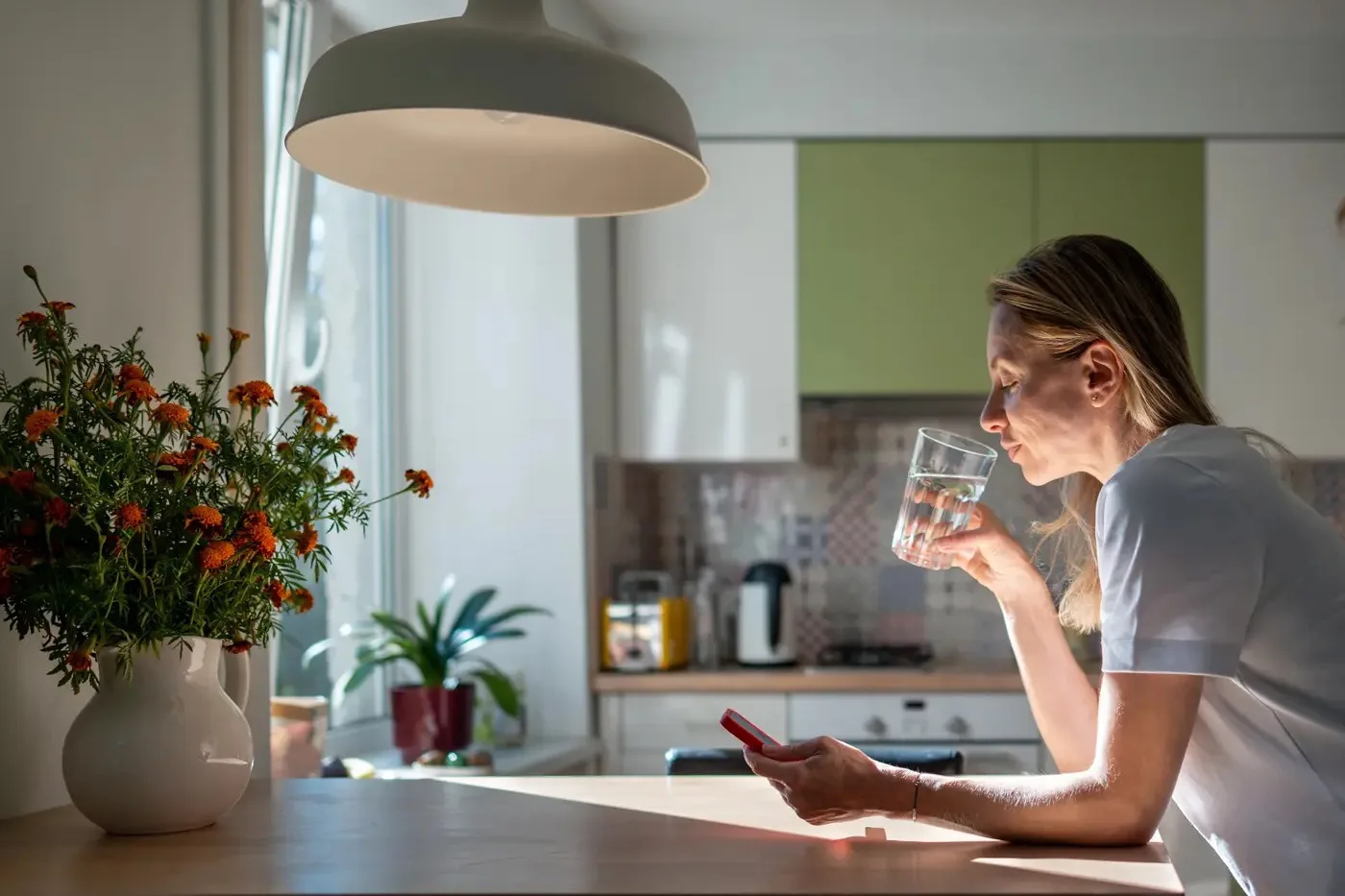
A pounding pulse, chest tightness, a churning stomach, pins and needles in the hands, a lump in the throat. The whole body takes part in anxiety, since the threat response is a whole-body event. A good share of clients reach us after a heart evaluation or an ER trip turned up no physical cause.
Clean results do not mean nothing is happening. More often the alarm system is what has gone wrong, and that can be treated.
Early in therapy we explain what the body is doing and why. That understanding alone takes the edge off the sensations for plenty of people. You learn which sensations are the alarm and which deserve a call to a doctor, and your clinician will say when a medical check is wise.
It also helps to know that anxiety is common, treatable and not a sign of weakness. Many people live with it for years before they mention it to anyone, and seeking help at any point is reasonable.
If your worry has a repeating ritual attached to it, our OCD specialist page for Paterson explains how that differs from general anxiety.
How treatment works: approach, not avoid
At its center, treating anxiety means moving toward the feared thing rather than away from it. A scare becomes a disorder through avoidance. Every highway trip skipped and every invitation turned down convinces the brain that the situation was dangerous and you barely escaped. Therapy reverses that lesson.
CBT teaches you to catch the forecasts anxiety makes, such as I will faint, they will laugh or I cannot cope. Next you check those forecasts against real situations, gradually and only with your consent, and discover they missed the mark. Our CBT page for Paterson describes that structure.
With panic, the work includes interoceptive exercises, in which the feared body sensations are safely brought on during a session until a pounding heart is simply a pounding heart. In social anxiety, the task is giving up the hidden crutches that keep fear alive: rehearsing too much, looking away from people or having a drink first. Graded exposure settles most phobias in fewer sessions than people anticipate.
Weekly sessions are the usual starting point for an anxiety therapist in Paterson. Where appropriate, clinicians add acceptance-based methods and training in relaxation and breathing. Whatever the diagnosis, the plan is tailored to you.
What the first sessions are like
An anxiety therapist in Paterson or at our Roseland office starts with an evaluation. Together we identify the pattern and settle on a plan. You will not be asked to face anything hard on day one, and you set the pace afterward.
You can expect a conversation about your symptoms, when they started, what makes them better or worse and what you have already tried. Your clinician then explains what they see and what treatment might involve. Sessions run 45 to 60 minutes, usually weekly at first.
Many people want to know how long it takes. That depends on the pattern, how long it has run and how much practice happens between visits. Phobias often improve faster than long-standing generalized worry. Your clinician can give a realistic range after the first evaluation.
Roseland Psychotherapy Associates does not prescribe. If medication seems worth considering, we coordinate with local psychiatric professionals and provide referrals, and therapy continues alongside it. You can learn more on our depression and anxiety page.
When anxiety is running your schedule, call (973) 226-1505 or use the appointment request form.
Anxious children and teenagers
In kids, anxiety frequently hides behind other things, such as stomachaches before school, meltdowns at drop-off, perfectionism about homework or a bedtime ritual that depends on reassurance and never quite settles them.
Children and adolescents are treated with age-appropriate methods here, and parents are included in the plan. The way a family reacts to a child's worry carries a lot of weight. Comfort helps. Organizing home life around the fear usually strengthens it.
Parents learn how to support a brave step without rescuing the child from it, and how to respond to a worry question without answering it for the tenth time. Kids learn to name the worry, shrink it and practice what they have been avoiding.
If your teen is the one struggling, our therapy for teenagers in Paterson page describes privacy, parent check-ins and school coordination. For a younger child, a short call to the office is the easiest way to learn whether an evaluation makes sense.
If anyone in your family is having thoughts of self-harm, call or text 988, the Suicide & Crisis Lifeline, or go to the nearest emergency room.
From Paterson to Roseland, or from home
Our Roseland office is about 21 minutes and 13.5 miles from Paterson. Drivers usually take CR 611 or CR 613, and I-80 runs through the city if that works better for you. The building is on the first floor at 425 Eagle Rock Avenue, Suite 103, with free parking at the front and side.
We also serve people in nearby Haledon, Totowa, Woodland Park, Prospect Park, Little Falls and Clifton. When driving is part of the problem, say so when you call, because video may be a good way to start.
Video reaches any New Jersey address, and it suits anxiety work well because exposure can be rehearsed at the spot where the fear arises, whether that is your car, your kitchen or a home office before a presentation. It also serves people for whom the fear of leaving home is exactly what has blocked them from getting help.
You can alternate between the office and video as your weeks change. To book, call (973) 226-1505. The office can check your insurance coverage when you call.

Further reading: Anxiety and Depression Association of America.
Who you'd see
Clinicians who treat Anxiety


Anxiety therapy for Paterson: getting here
Usual route: Eagle Rock Avenue (CR 611), CR 613, I-80.
Roseland Psychotherapy Associates
425 Eagle Rock Avenue, Suite 103
Roseland, NJ 07068 · (973) 226-1505 · Open in Maps
Nearby towns we also serve
How to get started
Call or request a time
Call (973) 226-1505 or use the appointment form. Our office answers questions and can check your insurance coverage.
We match you
Tell us what is going on and when you are free. We pair you with the licensed clinician on our team who fits your concern and schedule.
Start in person or by video
Meet at 425 Eagle Rock Avenue with free parking, or log in from home in Paterson. You can switch between the two as life changes.
Anxiety therapy in Paterson: questions
Still unsure? Call (973) 226-1505 and ask us directly.
Is there an anxiety therapist near Paterson?
Yes. Roseland Psychotherapy Associates is about 21 minutes from Paterson, in Roseland, and many of our licensed clinicians treat anxiety. You can meet in the first-floor office with free parking or by secure video. Call (973) 226-1505 and the office will help you choose a clinician.
Can I do anxiety therapy by video from Paterson?
Yes. Secure video is offered anywhere in New Jersey. For anxiety it has a real advantage, since exposure practice can happen where the fear shows up, such as your car or kitchen. Video also helps if fear of leaving home is the barrier. Many clients mix video and office visits.
How do I know if it is panic or a medical problem?
Panic can feel exactly like a medical emergency, so it is wise to have chest pain or breathing trouble checked by a doctor. If tests find nothing wrong, the alarm itself may be the problem, and it can be treated. Your clinician will say when a medical check is needed.
What will therapy ask me to do?
You will be asked to approach what you fear in small steps, at a pace you agree to, rather than avoiding it. Nothing hard happens in the first session. Your clinician explains each step and the reason for it, and you can always slow down or ask questions.
How long does anxiety therapy take?
It depends on the pattern, how long it has lasted and how much you practice between visits. Specific phobias often respond in fewer sessions than people expect. Sessions run 45 to 60 minutes, usually weekly, and your clinician gives you a realistic range after the evaluation.
Does insurance cover anxiety therapy?
Coverage depends on your plan. Call (973) 226-1505 and the office can check your insurance coverage when you call, so you know what to expect before your first visit. You do not need a referral to schedule an appointment.
Call or text (973) 226-1505
We'd love to hear from you. Tell us a little about what's going on and we'll match you with the therapist who fits you best, and check your insurance while we're at it. If you already know who you'd like to see, we'll book you with them. No referral needed. Press 0 for scheduling.
Weekday, evening and weekend appointments. Most major insurance accepted.